Tourism-of-India.com offers complete information on Tourism in Chotanagpur, Chota Nagpur Tourism, Tourism in Chotanagpur, Chota Nagpur Tourism India, Tourism of Chotanagpur India.
 
  India Tours, India Vacations, Travel to India, Hotels in IndiaIndia Tours, India Vacations, Travel to India, Hotels in India

Tourism of India

India Tours, India Vacations, Travel to India, Hotels in India


CHOTANAGPUR


Instant Hotel Booking for Chotanagpur
Hotels around Chotanagpur

LOCATION

The Chotanagpur plateau falls in the southern part of the Indian state of Bihar and forms the eastern end of the Vindhya ranges. The wild animals and plants inhabiting the region share their residence with the indigenous people and live a harmonious and symbiotic life.

123andgo.com
TOURISTS ATTRACTIONS

Ranchi was once the summer capital of Bihar and even now retains its charm. On the outskirts of Ranchi lies the famous Tagore Hill, named after Rabindranath Tagore who is believed to have written a part of his famous Gitanjali here, besides other poems. At the other end of Ranchi is the Kanke Dam, which is ever crowded with tourists. A few kilometers from the dam is the 17th-century Jagannath Temple where the annual Ratha Yatra is held in the month of June/July. On Ranchi-Hazaribagh road is the War Cemetery, which is the smallest 'concentration' cemetery in India with 708 burials, which includes a soldier of the army of undivided India, besides various other compatriots who fought for the British cause. The graves are well classified and deserve attention for their appealing epitaphs like "may some gentle hand in the far off land lay down a flower for us."

Ranchi offers an ideal opportunity to those interested in anthropology. Bihar Tribal Research Institute and Museum is well worth a visit for those seeking to know more about the tribal life of Bihar.

McCluskieganj is a small village near Ranchi that was once popular with the Anglo-Indian community. Filmmakers have taken note not only of the spectacular natural beauty, clean air, and extravagant greenery, but also of the village itself, a heady mix of the untamed and the sophisticated. Some of the houses here have retained their English names together with the epitaph of 'haunted house'. During the 1950s, there were no less than 100 Anglo-Indian families with their typical cottages, clubs, and shops.

The world's first tiger census was done in the Palamau forests in 1932. There were around 54 tigers here in 1991. One can drive through patches of dense sal and bamboo forests in the national park. The best time to visit the national park is from February to April. Tiger, panther, sloth bear, gaur, Indian porcupine, wolf, wild boar, dhole (wild dogs), chinkara, sambar, mouse deer, and pangolin find refuge in these forests. Elephants appear during the monsoon when there is abundant water around. During the rest of the months, the water sources dry up and the park faces acute water scarcity. The park is spread over a core area of 250 square kilometers and is also known as the Betla National Park. The park is laden with a severe biotic pressure from 107 villages in the buffer and three in the core. Livestock dependence is also high. Peafowl, red jungle fowl, and partridges are the common birds here.

The Hazaribagh Wildlife Sanctuary is set in a similar ecosystem. Hence, most of the denizens of the wild found in Palamau can also be seen here. Sighting of wild boar, sambar, nilgai, cheetal, and kakar is assured, especially near the waterholes at dusk. Tigers, being less in number-14 according to the 1991 census-are difficult to sight. The sanctuary is at an average altitude of 1,800 feet and stretches over 184 square kilometers of undulating country and steep hills with dense tropical forests and grass meadows. However, the national highway passing through the sanctuary is a cause of disturbance to their environment.

It is worth driving on a couple of hours through Betla to Netarhat, which is a pretty place at an elevation of 1,250 meters. It is renowned for spectacular sunrises and sunsets, plus the scenery.

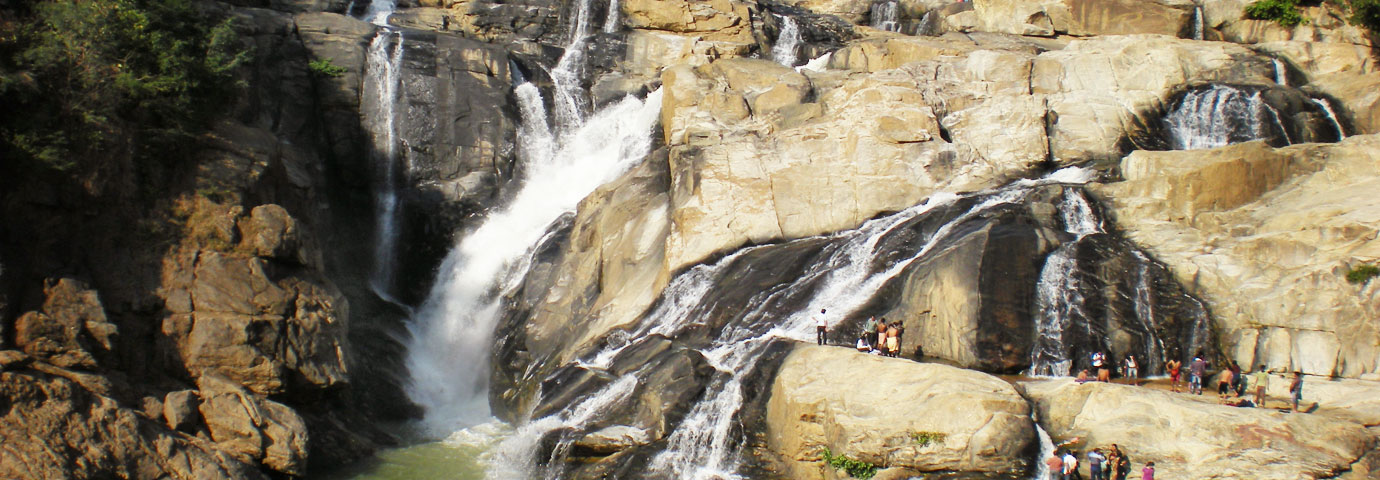
Rajrappa, 90 km from Hazaribagh town, is famous for Ma Chhina Mastika temple where River Bhera joins the Damodar from a height of 20 ft. The little waterfall offers boating facilities, which introduces some very spectacular rock formations in this area.

Graced with a pleasant climate and picturesque places, Hazaribagh plateau has on its eastern margin Parasnath, the highest hill in Bihar, rising to a height of 4,480 ft. The loftiness here is of another order. According to Jain tradition, no less than 20 out of 24 tirthankaras or saints (including Parsvanath) are believed to have attained salvation in the Sammeta Shikhar or the Parasnath hills. The hill seems to have been an abode of Jains. Parsvanath, the twenty-third tirthankara was very popular among the tribal population of Chotanagpur. Both the Swetamber and Digambara Jains have many beautiful temples here on the hills.

WHERE TO STAY

Major places like Ranchi and Hazaribagh have moderate accommodation options available. Tourist cottages are available in the national parks at Palamau and Hazaribagh.

We offer excellent accommodation facilities in and around Chotanagpur.

                                                                                  Please click here to get more information....
HOW TO REACH

BY AIR - Ranchi has an airport and Indian Airlines has regular flights from here.

BY RAIL - Ranchi is well connected by rail with Patna, Calcutta, and other major cities.

BY ROAD - There are buses to Ranchi from Raxaul, Patna, and Gaya.

Tourism-of-India.com provides complete information about tourism in Chotanagpur. Tourism-of-India.com offers various tour packages to make you visit comfortable. You can pick the one that suits you most.

Tourism-of-India.com offers for Chotanagpur
Tour PackagesYes
Budget HotelsYes
Other accommodationYes
TransportYes
EscortsYes
GuideYes
PorterYes